
Straßengüterverkehr ab Spanien · Praxisleitfäden
Leitfäden für spanische Exporteure
Praxisnahe Erklärungen zum Straßengüterverkehr ab Spanien: britischer Zoll nach dem Brexit, Schweizer Importabwicklung, LTL im Vergleich zu ADR-Klasse 9, Grundlagen zu EORI, CMR und HS-Codes sowie Transitzeiten je Korridor.
Säulenguides

Säulenguide · Spanien → Deutschland
Spanien → Deutschland im Straßengüterverkehr: der komplette Relationsleitfaden 2026
Spanien → Deutschland ist unsere zweitstärkste Relation. Sie verläuft innerhalb der EU — keine Zollabfertigung — reibungslos ist sie deshalb noch lange nicht. Dies ist das komplette Handbuch 2026: Geografie, Laufzeitprofile, Mautökonomie, die Compliance-Ebene, an der spanische Frachtführer scheitern, und das branchenweise Muster, wie tatsächlich verladen wird.
16 Min. Lesezeit
Säulenguide · Sammelgut
Sammelgut ab Spanien: der komplette Relationsleitfaden
SAVA Logistic bündelt Teilladungen aus Spanien auf 16 europäische Relationen, aus unserem Hub bei Barcelona heraus. Dieser Leitfaden behandelt jede Relation, jede Laufzeit und alles, was Sie über Buchung, Sendungsverfolgung und die Optimierung Ihrer Teilladungen wissen müssen.
16 Min. Lesezeit
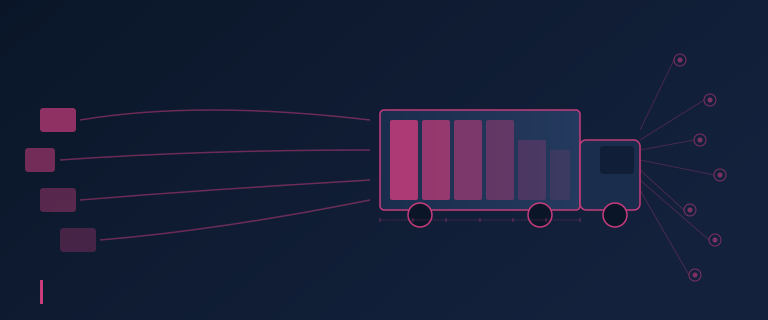
Entscheidungsleitfaden · +2LDM-Sammelgut
Wann sich +2LDM-Sammelgut ab Spanien lohnt — der komplette Entscheidungsleitfaden
Nicht jede Sendung rechtfertigt einen ganzen Lkw, und nicht jede Teilladung passt in das Palettenraster des Standardstückguts. Dieser Leitfaden hilft Ihnen zu entscheiden, wann +2LDM-Sammelgut — 2 bis über 6 Lademeter auf planmäßiger Konsolidierung — für Ihre Verkehre von Spanien nach Europa die richtige Wahl ist.
12 Min. Lesezeit
Säulenguide · Spanien → Frankreich
Spanien → Frankreich im Straßengüterverkehr: der komplette Relationsleitfaden 2026
Spanien → Frankreich ist unsere kürzeste und meistbefahrene grenzüberschreitende Relation. Sie verläuft innerhalb der EU und des Schengen-Raums — kein Zoll, keine Grenzabfertigung, keine Aus- oder Einfuhranmeldungen —, die Papiere sind also nur der CMR-Frachtbrief, die Handelsrechnung und die Packliste. Mühelos macht die gemeinsame Grenze bei La Jonquera die Sache trotzdem nicht: Umweltzonen mit Crit'Air, das französische Wochenendfahrverbot und die sommerlichen Fahrverbote auf den Urlaubsrouten prägen, wie die Relation tatsächlich läuft. Dies ist das komplette Handbuch 2026.
15 Min. Lesezeit
Säulenguide · Spanien → Italien
Spanien → Italien im Straßengüterverkehr: der komplette Relationsleitfaden 2026
Spanien → Italien ist eine unserer dichtesten Relationen und für spanische Hersteller eine der drei wichtigsten Ausfuhrstrecken. Sie verläuft innerhalb der EU — kein Zoll, keine Grenzabfertigung, keine Aus- oder Einfuhranmeldungen —, die Papiere sind also nur der CMR-Frachtbrief, die Handelsrechnung und die Packliste. Doch die Küstenführung durch Südfrankreich und der Übergang bei Ventimiglia, die italienischen Sonn- und Feiertagsfahrverbote und die Umweltzonen der Poebene prägen, wie die Relation tatsächlich läuft. Dies ist das komplette Handbuch 2026.
15 Min. Lesezeit
Säulenguide · Spanien → Vereinigtes Königreich
Spanien → Vereinigtes Königreich nach dem Brexit: der komplette Leitfaden 2026
Fünf Jahre nach dem Wirksamwerden des Brexits ist der Verkehr Spanien → Vereinigtes Königreich nicht mehr „neu“ — aber weiterhin die Relation, auf der die meisten Angebote danebenliegen. Dieser Leitfaden ist das komplette Handbuch 2026: Papiere, Ursprungsregeln, das Border Target Operating Model, die Wahl der Überfahrt und der Stundenverlauf einer sauberen Abfertigung.
18 Min. Lesezeit
Säulenguide · Spanien → Rumänien
Spanien → Rumänien: der komplette Leitfaden zur Vorzeigerelation
Spanien → Rumänien ist unsere Vorzeigerelation — feste Abfahrten von Montag bis Freitag (4×/Woche), der dichteste Fahrplan im Netz, und die Verbindung, bei der „Vorzeige“ kein Marketing ist. Sie verläuft innerhalb der EU, doch die rumänischen Systeme e-Transport und e-Factura legen eine Schicht darüber, die andere Relationen nicht haben. Hier ist das komplette Handbuch 2026.
17 Min. Lesezeit
Säulenguide · Leistungen
Stückgut oder Komplettladung ab Spanien: der komplette Entscheidungsleitfaden
Sammelgut und Komplettladung lösen unterschiedliche Probleme. Die falsche Wahl kostet Sie entweder Geld (Sie bezahlen leeren Aufliegerraum) oder Verlässlichkeit (Umschlagverzögerung auf einer zeitkritischen Sendung). Dieser Leitfaden deckt jeden Blickwinkel ab: Gewichtsschwellen, Kosten je Palette, Umschlagfahrplan in unserem Hub bei Barcelona, Empfehlungen je Relation, Unterschiede in der Sendungsverfolgung, zollrechtliche Folgen, Branchenbeispiele und ein Entscheidungsbaum, den Sie bei jeder Buchung durchgehen können.
15 Min. Lesezeit
Leitfaden · Spanien → Deutschland
Dedizierte Komplettladung oder Sammelgut auf der Relation Spanien → Deutschland
Spanien → Deutschland ist nach Rumänien unsere zweitstärkste Relation. Komplettladung und Sammelgut laufen hier beide dicht. Die Wahl hängt weniger von der Entfernung ab als davon, wie Ihr Mengenmuster tatsächlich aussieht.
4 Min. Lesezeit
Leitfaden · Preisbildung
Lademeter (LDM) erklärt: so vermessen Sie Ihre Sendung für ein belastbares Sammelgutangebot
Im Sammelgut kaufen Sie keinen ganzen Auflieger — Sie kaufen eine Scheibe davon, und die Einheit, die Ihre Scheibe misst, ist der Lademeter (LDM). Ermitteln Sie Ihren LDM richtig, bevor Sie nach einem Preis fragen, und das Angebot stimmt beim ersten Mal, ohne Nachberechnung, wenn die Paletten im Hub eintreffen. Dieser Leitfaden erklärt genau, was ein LDM ist, zeigt die Berechnung aus der Palettengrundfläche und geht die Rechnung hinter jedem Sammelgutpreis durch.
7 Min. Lesezeit
Leitfaden · Preisbildung
Stapelbar oder nicht stapelbar: wie die Verpackung Ihre Lademeter verändert
Bei Teilladungen im Straßengüterverkehr bezahlen Sie weniger dafür, was Ihre Paletten wiegen, als für die Fläche, die sie auf dem Auflieger blockieren — und der größte Hebel, den Sie darauf haben, ist die Frage, ob sich Ihre Paletten stapeln lassen. Eine Ladung als nicht stapelbar anzugeben kann ihre Lademeter, und damit ihren Preis, auf einen Schlag verdoppeln. Hier steht, wie die Stapelbarkeit die Lademeterrechnung treibt, mit einem Beispiel, das Sie in unserem Rechner nachvollziehen können.
7 Min. Lesezeit
Leitfaden · Preisbildung
Das frachtpflichtige Gewicht erklärt: warum leichte, sperrige Ware mehr kostet
Wenn Sie schon einmal etwas Leichtes, aber Sperriges verschickt haben und vom Preis überrascht wurden, liegt es hieran: Straßenfracht wird nach dem höheren Wert aus tatsächlichem Gewicht und Volumengewicht abgerechnet. Wer die Regel kennt, kann die Kosten vorhersagen, Angebote fair vergleichen und so packen, dass er weniger zahlt. So funktioniert das frachtpflichtige Gewicht, mit Beispielen, die Sie in unserem Rechner nachvollziehen können.
6 Min. Lesezeit
Leitfaden · Preisbildung
Wie sich Straßengüterpreise bilden: was tatsächlich in einem Frachtangebot steckt
Ein Frachtangebot sieht aus wie eine einzige Zahl, besteht aber aus einer Handvoll klar benennbarer Zutaten. Wer sie kennt, kann seine Kosten vorhersagen, Angebote fair vergleichen und sehen, wo sich sparen lässt. Hier steht, was tatsächlich in einen Straßengüterpreis ab Spanien eingeht.
8 Min. Lesezeit
Leitfaden · Preisbildung
Wie der Dieselzuschlag im europäischen Straßengüterverkehr funktioniert
Fast jeder Straßengütertarif trägt einen Dieselzuschlag, der mit dem Kraftstoffpreis steigt und fällt. Er ist kein versteckter Aufschlag — in Spanien folgt er einer veröffentlichten Formel, die an einen amtlichen Dieselindex gebunden ist. Hier steht genau, wie er berechnet wird, mit einem Beispiel, das Sie in unserem Rechner nachvollziehen können.
7 Min. Lesezeit
Leitfaden · Zoll
Incoterms 2020 für spanische Exporteure erklärt
Ein Incoterm sind drei Buchstaben, die festlegen, wer den Transport organisiert und bezahlt, wer die Zollabfertigung übernimmt, wer die Ware versichert und an welchem Punkt genau die Gefahr vom Verkäufer auf den Käufer übergeht. Wählen Sie die falsche Klausel, und aus einem günstig aussehenden Angebot werden Kosten — oder eine Haftung —, die Sie nie eingerechnet haben. Hier stehen die Incoterms-2020-Klauseln, die für Straßenfracht ab Spanien zählen, in Klartext.
7 Min. Lesezeit
Leitfaden · Preisbildung
Nebenkosten im Straßengüterverkehr: Ladebordwand, Wartezeit, ADR und die Zuschläge, die Ihre Rechnung bewegen
Der Hauptlaufsatz und der Dieselzuschlag sind nur ein Teil einer Frachtrechnung. Nebenkosten sind die Zuschläge, die davon abhängen, was Ihre Standorte brauchen und was Ihre Ware ist — eine Ladebordwand, Wartezeit, eine Gefahrgutklasse. Es sind keine versteckten Gebühren, aber sie erwischen Versender, die sie nicht vorab angeben. Hier steht, was jede einzelne ist, warum sie anfällt und wie Sie sie von Ihrer Rechnung fernhalten.
7 Min. Lesezeit
Leitfaden · Chemie und ADR
Chemie und Gefahrgut (ADR) ab Spanien auf der Straße verschicken
Chemie ist eine der größten Exportkategorien Spaniens, und der größte Teil davon fährt auf der Straße nach ADR — dem europäischen Übereinkommen über die Beförderung gefährlicher Güter. Dies ist der Grundlagenleitfaden dazu: der Rahmen, die Gefahrgutklassen, welche verpackten Klassen wir befördern, wie begrenzte Mengen eine Ladung aus dem vollen ADR-Regime herausnehmen können und was eine gefährliche Ladung für Sammelgut statt für eine eigene Fahrt geeignet macht. Am Ende stehen die beiden Angaben, die in Ihrer ersten E-Mail stehen sollten, damit wir das richtige Gerät und einen geschulten Fahrer einteilen.
9 Min. Lesezeit
Leitfaden · ADR
ADR aus Spanien: was wir befördern und was nicht
ADR ist das europäische Übereinkommen über die internationale Beförderung gefährlicher Güter auf der Straße. Wir befördern den größten Teil des üblichen verpackten Gefahrguts ab Spanien. Hier steht, was zu uns passt und was nicht.
4 Min. Lesezeit
Leitfaden · ADR · Technik
Lithiumbatterien ab Spanien exportieren: ADR-Klasse 9 in der Praxis
Lithium-Ionen-Batterien sind überall — Zellen, Akkupacks, Akkuwerkzeuge, E-Bikes, Elektronik mit verbauten Batterien. Nach ADR sind sie Gefahrgut der Klasse 9. Hier steht, was Sie beistellen und was Ihr Frachtführer übernimmt.
4 Min. Lesezeit
Leitfaden · Laufzeitplanung
Laufzeiten für Exporte aus Spanien, Relation für Relation
Die mit Abstand häufigste Frage im Angebotsgespräch lautet: „Wie lange dauert es?“ Die Antwort hängt an der Lieferzone, nicht am Zielland: Hier steht für jede Relation, die wir fahren, was den Fahrplan bestimmt — Abfahrtsdichte, Zollprofil und die Postleitzahl, für die wir die Laufzeit im Angebot nennen.
3 Min. Lesezeit
Leitfaden · Angebotsablauf
Wie unser schriftliches Angebot in 15-20 Minuten funktioniert
Unser Ablauf ist bewusst einfach: ein Richtpreis online in 60 Sekunden, ein verbindliches schriftliches Angebot unserer Disposition in 15 bis 20 Minuten, gültig 24 Stunden. Hier steht, was jeder Schritt tatsächlich leistet.
3 Min. Lesezeit
Leitfaden · Grundlagen
Ab Spanien oder nur durch Spanien: wo der Unterschied liegt
Nicht jeder Frachtführer, der Preise für spanische Relationen nennt, fährt auch ab Spanien. Manche vergeben weiter, manche fahren nur im Transit durch die Halbinsel. Der Unterschied zeigt sich im Preis, in der Verlässlichkeit und darin, wer für Ihre Papiere tatsächlich einsteht.
4 Min. Lesezeit
Leitfaden · Leistungen
Wann sich eiliges Sammelgut ab Spanien lohnt (und wann Sie aufhören sollten, dafür zu zahlen)
Eiliges Sammelgut ist unser Prioritätsverkehr für Teilladungen — Abholung in derselben Woche, bevorzugte Verladung auf den Hauptverbindungen. Es kostet mehr als planmäßiges Sammelgut. Hier steht, wann es sich selbst bezahlt und wann nicht.
4 Min. Lesezeit
Leitfaden · Schäden und Versicherung
Warentransportversicherung oder CMR-Haftung: was bei einem Schaden tatsächlich gedeckt ist
Hinter einer beschädigten Sendung stehen zwei verschiedene Absicherungen, und Versender verwechseln sie regelmäßig. Die CMR-Haftung ist die gesetzliche Deckung, die der Frachtführer Ihnen von Rechts wegen schuldet — aber sie ist nach Gewicht gedeckelt, nicht nach Wert, und für bestimmte Ursachen greift sie gar nicht. Die Allgefahren-Warentransportversicherung ist ein eigenes Produkt, das den vollen Handelswert der Ware ersetzt, unabhängig davon, wer schuld war. Den Unterschied zu kennen entscheidet darüber, ob ein Schaden Sie unversehrt lässt oder mit einer fünfstelligen Lücke.
7 Min. Lesezeit
Leitfaden · Spanien → Schweiz
Zoll Spanien → Schweiz: wie eine Einfuhr abgefertigt wird
Die Schweiz gehört nicht zur EU, jeder Lkw ab Spanien quert also eine echte Zollgrenze. Die gute Nachricht: Der Ablauf ist ausgetreten — hier steht, was tatsächlich passiert.
5 Min. Lesezeit
Leitfaden · Grundlagen
EORI, CMR, Warennummern: Papiergrundlagen für spanische Exporteure
Bei Straßenexporten aus Spanien begegnen Ihnen immer wieder drei Dinge: die EORI-Nummer, der CMR-Frachtbrief und die Warennummern. Hier steht das Minimum, das jeder Exporteur wissen sollte — ohne Behördendeutsch.
4 Min. Lesezeit
Leitfaden · Zollbetreut
Wie zollbetreute Relationen auf Spanien → Vereinigtes Königreich und Spanien → Schweiz Zeit sparen
Zollbetreute Relationen sind kein anderes Rechtsregime. Sie sind ein anderer Arbeitsablauf: Die Papiere laufen parallel zum Lkw statt hinter ihm her. Daher kommt die Zeit.
3 Min. Lesezeit
Leitfaden · Zollrollen
Zollagent oder Spedition: wer Ihre Zollanmeldung tatsächlich abgibt
Exporteure werfen zwei verschiedene Aufgaben ständig zusammen. Die Spedition organisiert und bucht die Beförderung; der zugelassene Zollagent ist derjenige, der Ihre Anmeldung bei den Behörden abgeben darf. Das sind nicht dieselben Rollen, sie tragen unterschiedliche Haftung, und auf einer Drittlandsrelation brauchen Sie in der Regel beide. Dieser Leitfaden zieht die Linie sauber, erklärt direkte und indirekte Vertretung nach dem Unionszollkodex und zeigt, wie beide Rollen in einem zollbetreuten Angebot von SAVA zusammengeführt werden.
7 Min. Lesezeit
Leitfaden · Versandverfahren (T1/NCTS)
Das T1-Versandverfahren erklärt: wann eine Straßensendung eine T1 braucht, NCTS und die Sicherheit
Eine T1 lässt Nicht-Unionswaren das Zollgebiet der EU queren, während Einfuhrabgaben und Einfuhrumsatzsteuer ausgesetzt bleiben, bis sie die richtige Zollstelle erreichen. Es ist eines der am meisten missverstandenen Papiere im Straßengüterverkehr — teils, weil es gar kein Papier ist, sondern eine elektronische Beförderung, die durch eine Sicherheit gedeckt ist. Dieser Leitfaden erklärt, was eine T1 ist, wann Ihr Lkw tatsächlich eine braucht und wo SAVA dabei genau steht.
7 Min. Lesezeit
Leitfaden · Zoll und Umsatzsteuer
Umsatzsteuer Spanien → Rumänien erklärt: kein Zoll, sondern innergemeinschaftliche Umsatzsteuer, richtig gemacht
Das größte Missverständnis auf unserer stärksten Relation Spanien → Rumänien ist, dass sie Zoll bräuchte. Braucht sie nicht. Spanien und Rumänien sind beide EU-Mitgliedstaaten, die Beförderung ist also innergemeinschaftlich — keine Zollanmeldung, kein Versandverfahren im NCTS, keine Einfuhrumsatzsteuer an einer Grenze. Sie läuft stattdessen über den Umsatzsteuermechanismus der EU, und den vor der Verladung richtig zu haben ist das ganze Spiel. Dies ist allgemeine Information und keine Steuerberatung.
7 Min. Lesezeit
Leitfaden · Zoll und Umsatzsteuer
Aus Spanien nach Italien kaufen: Umsatzsteuer beim innergemeinschaftlichen Erwerb und Reverse-Charge, Schritt für Schritt
Wenn Sie ein italienisches Unternehmen sind, das Ware bei einem spanischen Lieferanten kauft, und die Ware auf der Straße von Spanien nach Italien fährt, ist das keine Einfuhr im zollrechtlichen Sinn — beide Länder liegen in der EU, es gibt also keine Zollanmeldung, kein T1-Versandverfahren, keine Einfuhrumsatzsteuer an einer Grenze und keine EORI-Nummer zu besorgen. Stattdessen liegt ein innergemeinschaftlicher Erwerb vor, den Sie in Ihrer eigenen italienischen Umsatzsteuererklärung im Reverse-Charge selbst verbuchen. Dieser Leitfaden geht den Mechanismus von Anfang bis Ende durch, auf der spanischen wie auf der italienischen Seite, mit einem durchgerechneten Beispiel über 20.000 €, das auf null aufgeht. Es ist allgemeine Information und keine Steuerberatung — die Einzelheiten klären Sie mit Ihrem commercialista.
7 Min. Lesezeit
Leitfaden · Keramik und Baustoffe
Spanische Keramikfliesen und Baustoffe auf der Straße exportieren
Keramikfliesen und Baustoffe sind schwere, dichte Palettenware, und das ändert fast alles daran, wie man sie verschickt. Wo die meiste Fracht nach dem belegten Raum bepreist wird, erreichen Fliesenpaletten die Gewichtsgrenze des Lkw längst, bevor ihnen der Platz ausgeht. Dieser Leitfaden ist das Frachthandbuch für den Export aus dem Keramikcluster von Castellón und Ostspanien: wie dichte Ladung bepreist wird, wann die Komplettladung das Sammelgut schlägt, wie man empfindliche Einheiten gegen Bruch schützt und welche EU-Relationen zollfrei allein auf dem CMR-Frachtbrief fahren.
8 Min. Lesezeit
Leitfaden · Branchen
Möbel und zerlegte Einrichtungsware aus Spanien verschicken: die Cluster Yecla und Valencia
Spanien ist eine der Möbelwerkstätten Europas, und der Großteil seines Exportvolumens verlässt drei Cluster: Yecla in Murcia, die weitere Region Valencia und La Sénia an der Grenze zwischen Castellón und Tarragona. Möbel und zerlegte Einrichtungsware haben ein eigenes Frachtprofil — sperrig und leicht, leicht zu zeichnen, und eine Mischung aus dichten Palettenpacks und empfindlichen montierten Stücken. Dieser Leitfaden behandelt, wie die Ladung bepreist wird, wie man sie schadensarm verpackt, welche Papiere auf innergemeinschaftlichen und auf Drittlandsrelationen gelten und welche Zusatzleistungen bei der Zustellung man besser vorab kalkulieren lässt.
7 Min. Lesezeit
Leitfaden · Betrieb
Paletten- und Verpackungsstandards im internationalen Straßengüterverkehr: EUR/EPAL, Folierung und Kennzeichnung
Wie Sie eine Palette stellen, entscheidet drei Dinge auf einmal: ob sie die Reise übersteht, was sie kostet und ob Sie im Schadensfall Ansprüche haben. Sind Palette, Folie und Kennzeichnung richtig, wird Ihre Ware fair bepreist und reist sicher; sind sie falsch, wird die Einheit umpalettiert, abgewiesen oder beschädigt — und nach dem CMR-Übereinkommen kann mangelhafte Verpackung durch den Absender Ihren Anspruch gegen den Frachtführer zunichtemachen. Das ist der praktische Standard, den wir von Absendern vor der Verladung erwarten.
8 Min. Lesezeit
Leitfaden · Branchen
Wein und ungekühlte Getränke aus Spanien auf der Straße exportieren — ohne Kühlung (Verbrauchsteuer und ADR erklärt)
Spanien ist eine der großen Weinherkünfte der Welt — Rioja, Ribera del Duero, Cava, La Mancha und ein riesiger Fassweinhandel. Die gute Nachricht für Exporteure: Die Ware ist einfacher zu bewegen, als sie aussieht. Abgefüllter und verpackter Wein fährt ungekühlt auf einem normalen Planenauflieger, Kühlung braucht es keine. Die Schwierigkeiten liegen im Papier, nicht in der Temperatur: Wein und Spirituosen sind verbrauchsteuerpflichtige Waren, die über EMCS reisen, und hochprozentige Spirituosen können Gefahrgut sein. Dieser Leitfaden erklärt beides, dazu Verpackung, Relationen und wie die Ware in den planmäßigen Sammelgutverkehr passt.
8 Min. Lesezeit
Leitfaden · Branchen
E-Commerce-Logistik ab Spanien: FBA-Nachschub, D2C-Fulfilment und Marktplatzfracht auf der Straße
Spaniens Fertigungsbasis — Kosmetik, Lebensmittel, Mode, Haushaltswaren, Nahrungsergänzung — beliefert einen wachsenden Teil des europäischen E-Commerce. Ob Sie Amazon-FBA-Lager auffüllen, Ihren eigenen Logistikdienstleister versorgen oder D2C-Ware an ein Fulfilment-Zentrum schicken: Die Fracht bewegt sich gleich, palettiert, auf der Straße, im planmäßigen Sammelgut oder als Komplettladung. Dieser Leitfaden behandelt, wie die Ware in den Straßengüterverkehr passt, wie man für die Annahme im Fulfilment-Zentrum verpackt und kennzeichnet, die Umsatzsteuer- und Zollmechanik und die Relationen, auf die es ankommt.
7 Min. Lesezeit
Leitfaden · Präferenzursprung
Präferenzursprung, EUR.1 und REX: wie spanische Exporteure Zoll im Bestimmungsland sparen
Die EU hat Freihandelsabkommen mit Dutzenden Partnerländern, und Ware, die als EU-Ursprungsware gilt, kann in diesen Märkten häufig zu ermäßigtem oder null Zoll eingeführt werden. Die Ersparnis kommt aber nur an, wenn Sie einen gültigen Ursprungsnachweis mitführen. Dieser Leitfaden erklärt den Präferenzursprung, die Warenverkehrsbescheinigung EUR.1, die Ursprungserklärung auf der Rechnung und das REX-System, mit dem spanische und rumänische Exporteure oberhalb von 6.000 EUR selbst zertifizieren.
7 Min. Lesezeit
Leitfaden · Zoll
Aufgeschobene Einfuhrumsatzsteuer erklärt: Liquidität schützen bei Einfuhren nach Spanien (IVA diferido) und darüber hinaus
Einfuhrumsatzsteuer ist normalerweise bei der Abfertigung an den Zoll zu zahlen und wird Wochen später über die Umsatzsteuererklärung zurückgeholt. Für ein voll steuerpflichtiges Unternehmen ist diese Zeitlücke totes Geld: Liquidität, die an der Grenze festhängt, für eine Steuer, die Sie ohnehin zurückbekommen hätten. Der Aufschub, auch Postponed Accounting genannt, behebt das Timing, indem er die Einfuhrumsatzsteuer von der Grenze in die periodische Erklärung verlegt. Dieser Leitfaden erklärt, wie das in Spanien als régimen de diferimiento del IVA a la importación funktioniert, wie die Gegenstücke im Vereinigten Königreich und in der EU aussehen, wer es wählen kann und wo genau die Linie zwischen einer Frachtaufgabe und einer steuerlichen Entscheidung Ihres Beraters verläuft. Es ist keine Steuerberatung.
7 Min. Lesezeit
Leitfaden · Zoll
Ihre HS- und TARIC-Warennummer finden und prüfen (und warum sie den Zoll entscheidet)
Eine einzige Zahl auf Ihrer Zollanmeldung entscheidet still über fast alles, was danach kommt: den Zoll, den Sie zahlen, die Einfuhrumsatzsteuer, ob eine Genehmigung oder Beschränkung greift und ob Sie Präferenzursprung beanspruchen können. Diese Zahl ist die Warennummer, und sie falsch zu haben ist einer der teureren Fehler, die ein Exporteur machen kann. Dieser Leitfaden erklärt die Hierarchie aus HS, KN und TARIC, zeigt, wie Sie mit den amtlichen EU-Werkzeugen und den rechtlichen Auslegungsvorschriften die richtige Nummer finden, und legt dar, wie Sie sie verbindlich absichern — samt der Stelle, an der SAVA ein Problem melden kann und an der die Verantwortung fest bei Ihnen bleibt.
8 Min. Lesezeit
Leitfaden · Zoll
Das Carnet ATA erklärt: vorübergehende Ausfuhr von Mustern, Messeständen und Berufsausrüstung
Wenn Sie Ware ins Ausland schicken, die unverändert zurückkommen muss — eine Stange Modemuster nach Mailand, eine Vorführmaschine zu einer Schweizer Messe, ein Kamerapaket zu einem Dreh im Vereinigten Königreich —, sollten Sie darauf an der Grenze weder Einfuhrabgaben noch Einfuhrumsatzsteuer zahlen. Das Carnet ATA ist das internationale Zollpapier, das genau dafür gebaut ist: vorübergehende Verwendung von Waren in einem fremden Zollgebiet für bis zu ein Jahr, abgaben- und steuerfrei, gegen eine Sicherheit. Dieser Leitfaden erklärt, was das Carnet abdeckt, wie es an jedem Übergang abgestempelt wird, wann Sie wirklich eines brauchen und welche Fehler aus einem erledigten Carnet eine Abgabenrechnung machen.
7 Min. Lesezeit